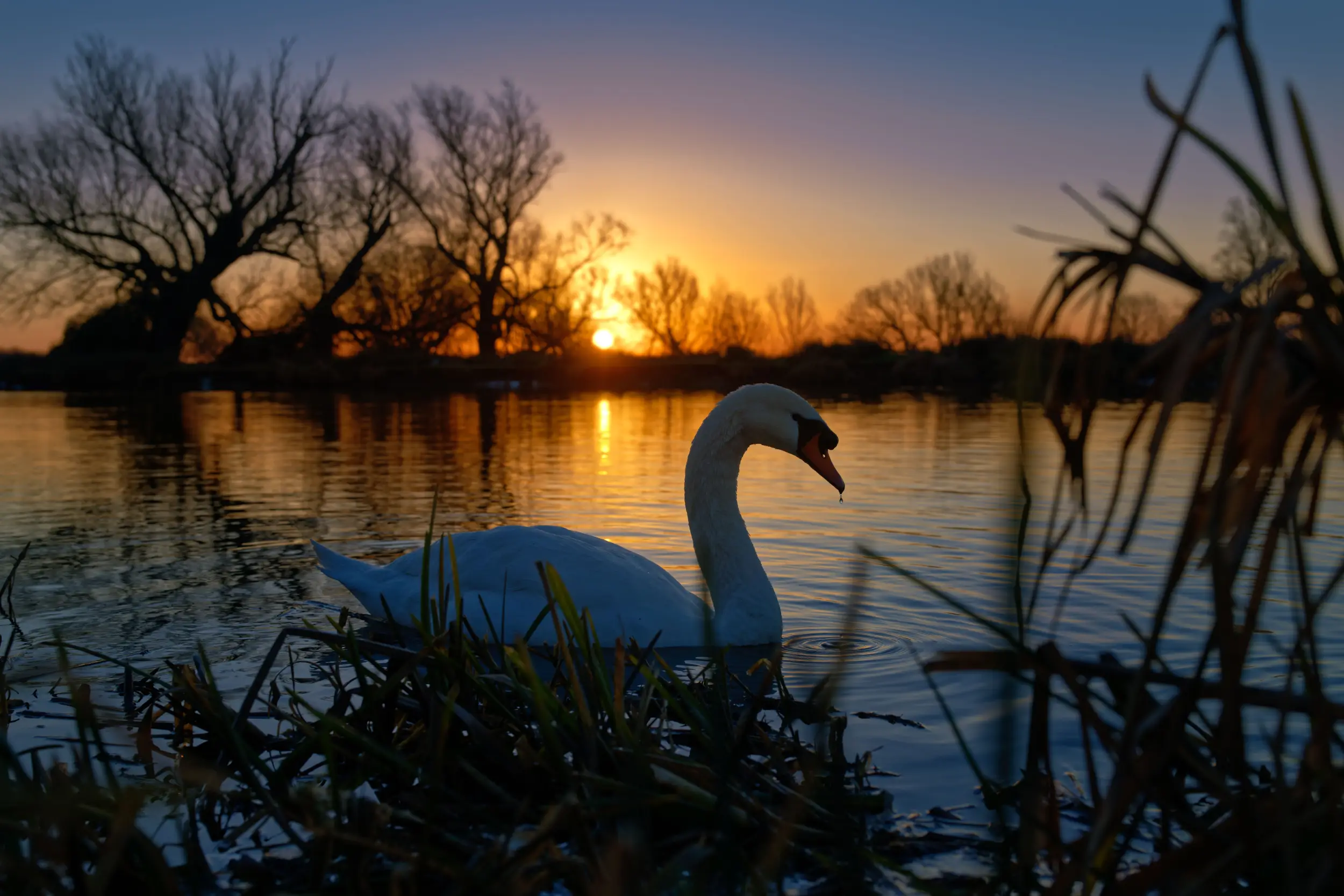
Big skies. Wild encounters.
Wildlife
& Wetlands.
A swan’s call across the water. Reeds moving in the breeze. A sky suddenly full of wings. Slow down and discover the wild heart of the Fens.
Find your wild placeRoom to breathe. Space to notice.
There’s more
to this landscape
than meets the eye.
What looks quiet from a distance is full of life when you stop to look.
Follow a reed-fringed waterway, settle into a hide or wander beneath silver birches. Across the Fens, surviving ancient wetlands sit alongside places where nature is being given room to return.
From the freshwater world of Wicken Fen to the tidal edges of the Wash, this is a landscape of different habitats, changing water levels and extraordinary seasonal journeys.
You don’t need to know every bird’s name. Bring your curiosity. The rest begins with looking.
Reeds, sedges & still water
The freshwater Fens
Look beyond the open water. Ditches, pools and tall wetland vegetation create a world of shelter, song and small discoveries. Wicken Fen and Woodwalton Fen offer a connection with the ancient wild landscape.
Floodwater & open horizons
The living washes
The Ouse Washes change with the water and the seasons. At Welney, winter wildfowl give way to spring breeding birds and summer insects: a place worth coming back to.
Saltmarsh, mudflats & tides
Where land meets sea
At the edge of the Wash, the scale opens out again. Explore Frampton Marsh, or head to Snettisham, where the right tide can bring a remarkable gathering of wading birds.
Find a little wildness
Extraordinary nature.
Closer than you think.
Begin with one of these special places. Each link takes you to its Discover the Fens profile, with more about the destination and how to plan a visit.
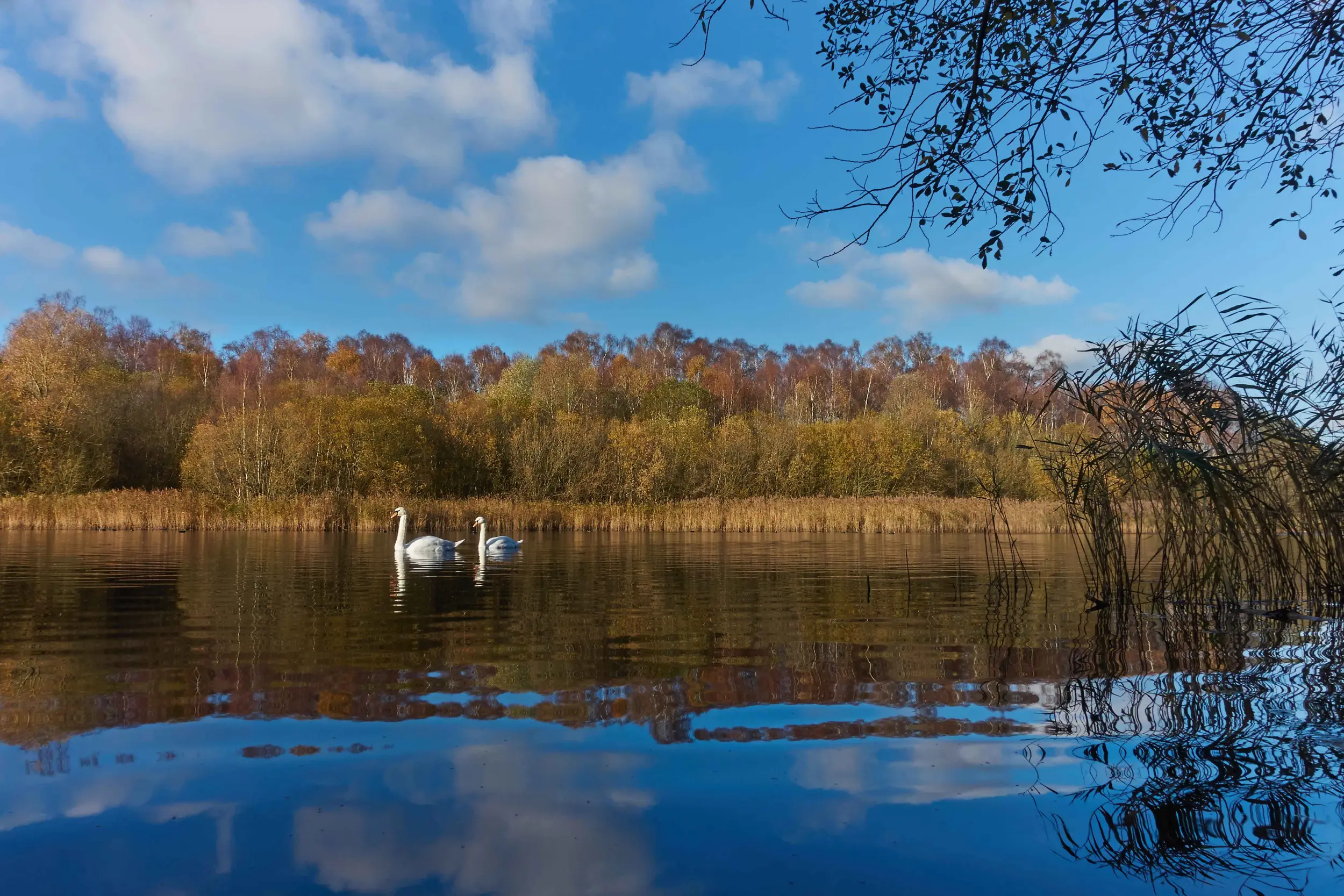 Holme Fen · Within the Great Fen
Cambridgeshire · A landscape returning to life
The Great Fen.
A wilder future.
A remarkable restoration project is reconnecting Holme Fen and Woodwalton Fen. Explore a growing mosaic of habitats, with different places to walk, watch and discover across the wider landscape.
Discover the Great Fen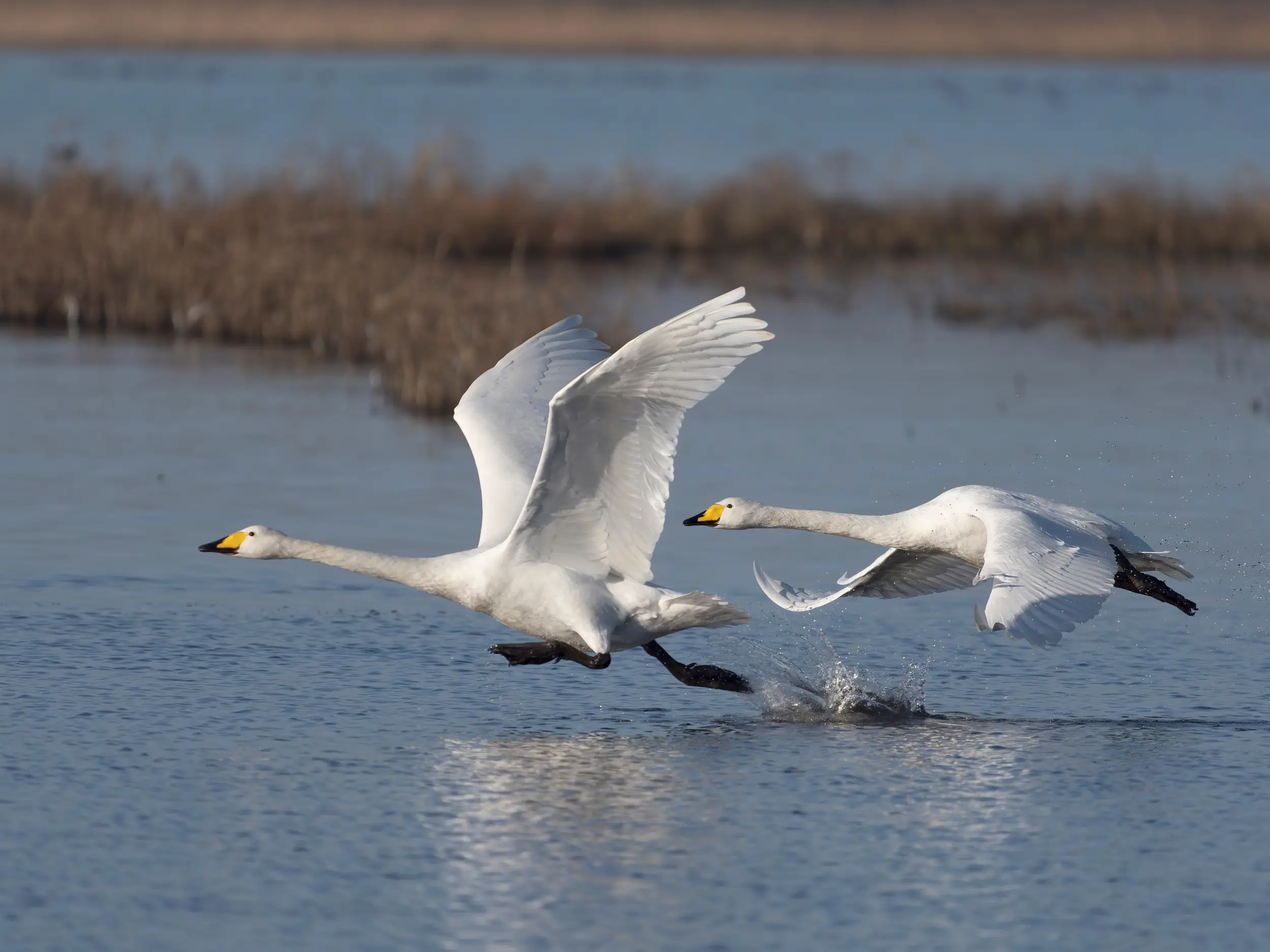 Swans in flight · WWT Welney
Norfolk Fens · On the Ouse Washes
Welney.
Let the wild
come to you.
Watch the water from a hide and discover a wetland that changes throughout the year. Winter brings visiting swans; warmer months reveal breeding birds, flowers and dragonflies.
Explore WWT Welney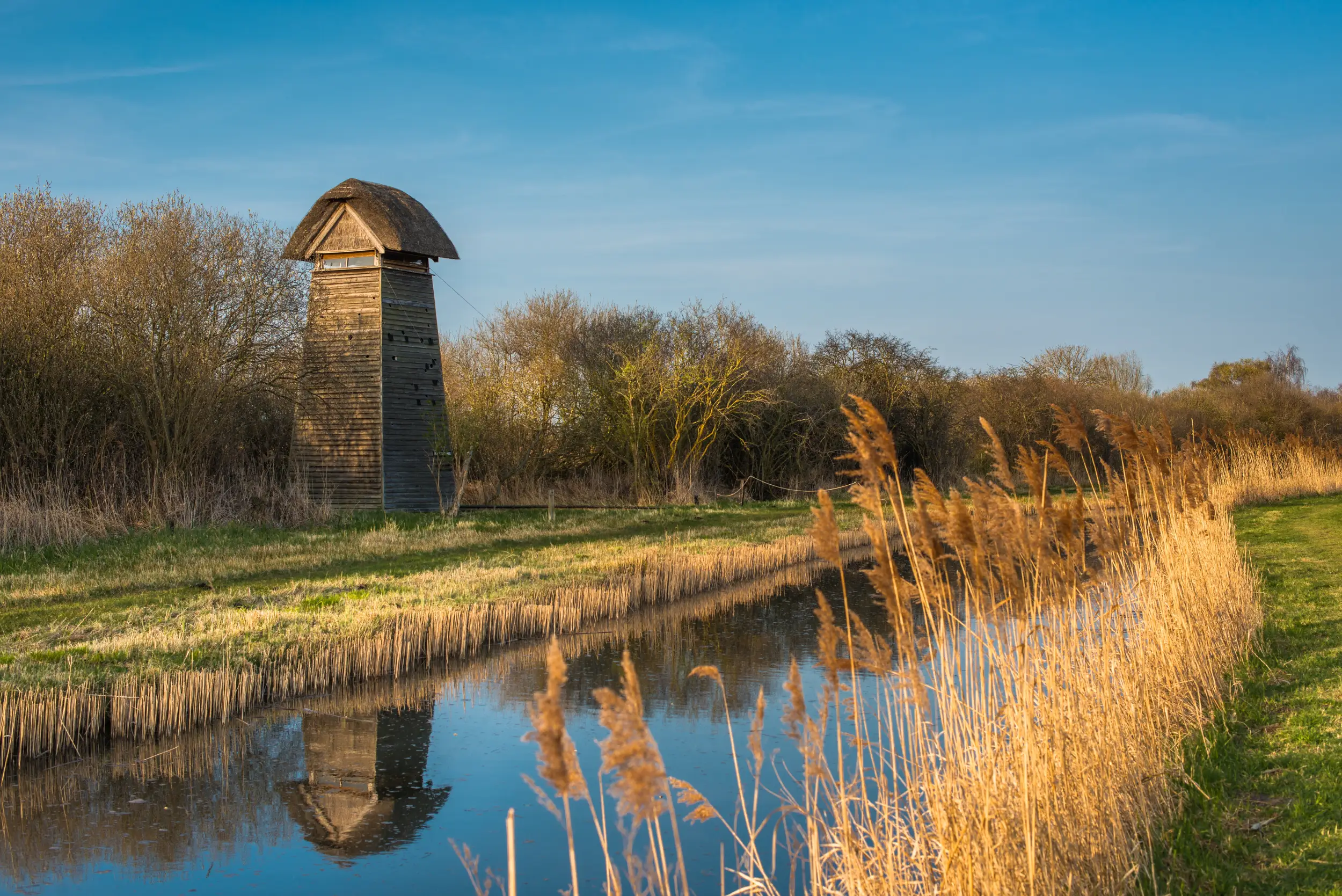
Wicken · Cambridgeshire
Wicken Fen
Windpump, waterways and a rare surviving fen landscape. The National Trust’s reserve rewards a slower pace: listen for birds in the reeds and look closely at the life along the water’s edge.
Discover Wicken Fen
Near Boston · Lincolnshire
Frampton Marsh
Freshwater habitats meet the edge of the Wash at this RSPB reserve. Explore reedbeds and shallow pools, scan for waders and enjoy the long views from the sea bank.
Explore Frampton MarshAncient fen · Quiet discoveries
Woodwalton Fen
Follow paths through a surviving fragment of wild fen. Reedbeds, meres and rich plant life make this a place to pause, listen and look closely.
Explore Woodwalton FenBirch woodland · A different perspective
Holme Fen
Discover another side of the Great Fen among silver birches. The famous Holme Posts also reveal how far the surrounding peat surface has fallen since drainage.
Discover Holme FenThe Wash · A sky full of birds
RSPB Snettisham
On selected high tides, flocks of waders rise above the Wash in a breathtaking spectacle. Timing matters: check the reserve’s published dates before setting out.
Explore SnettishamWater levels, wildlife and access change with the seasons. Use each place profile to find current visitor information before travelling.
A reason to return
One landscape.
Four different worlds.
The Fens follow their own seasonal rhythm. These are starting points for a visit: weather, water and migration mean no two days are quite the same.
Listen to the reeds
Warblers return and wetland birds begin their breeding season. At Welney, watch for displaying lapwings and the first signs of new life.
Spring at WelneyNotice the smaller things
Flowers brighten the fen and dragonflies patrol the waterways. Take your time beside Woodwalton’s ditches and pools; a short walk can hold plenty to discover.
Summer at WoodwaltonFollow the changing tide
Migrating waders make the Wash a rewarding place to watch. Plan a Snettisham visit around the reserve’s recommended tides for a chance of its great aerial display.
Autumn at SnettishamWelcome the swans
Whooper swans arrive from Iceland to winter in the Fens. Welney is a wonderful starting point for watching the season’s wildfowl and listening to their calls.
Winter at WelneyMake a little time for nature
Less rushing.
More noticing.
You don’t need an ambitious itinerary. Choose one place, leave time to linger and let the landscape set the pace.
Pick your kind of day
Choose Welney for watching wetland birds, Wicken for a classic fenland landscape, or one of the Great Fen’s individual reserves for a quieter walk. At the coast, let the tide help shape your plans.
Come comfortably prepared
Bring layers, footwear suited to the paths and binoculars if you have them. Check opening times, admission, route accessibility and dog rules for your chosen reserve; these vary from place to place.
Give wildlife its space
Keep to permitted paths, observe quietly and follow signs around nesting birds and grazing animals. Let a distant encounter stay distant. The best view is one that leaves wildlife undisturbed.
Sometimes the most memorable part of a day is the moment you stop walking.
Your next escape is closer than you think
Find your
wild side.
A quiet hide. A waterside walk. A whole afternoon beneath an enormous sky. Make room for a little Fenland wonder.
Photography credits
Mute swan, Holme Fen, WWT Welney and Wicken Fen photographs supplied through Discover the Fens.
Reedbed, Frampton Marsh — Hugh Venables / Geograph, licensed under Creative Commons Attribution-ShareAlike 2.0. Cropped for this layout; the same licence applies to the crop.
